
Overview
Local energy cooperatives are bottom-up civil society organisations that typically engage in renewable energy and energy savings projects and have been acknowledged as essential for engaging citizens in the energy transition by the EU and Dutch government, yet they lack organisational professionalism.
This research created a framework to help cooperatives and umbrella organisations understand what needs to happen for cooperatives to professionalize and barriers therein. The game ‘EcoCoop: Road to 2035’ aims to tackle the barrier of low strategic thinking among cooperative board members.
Click here for the full report
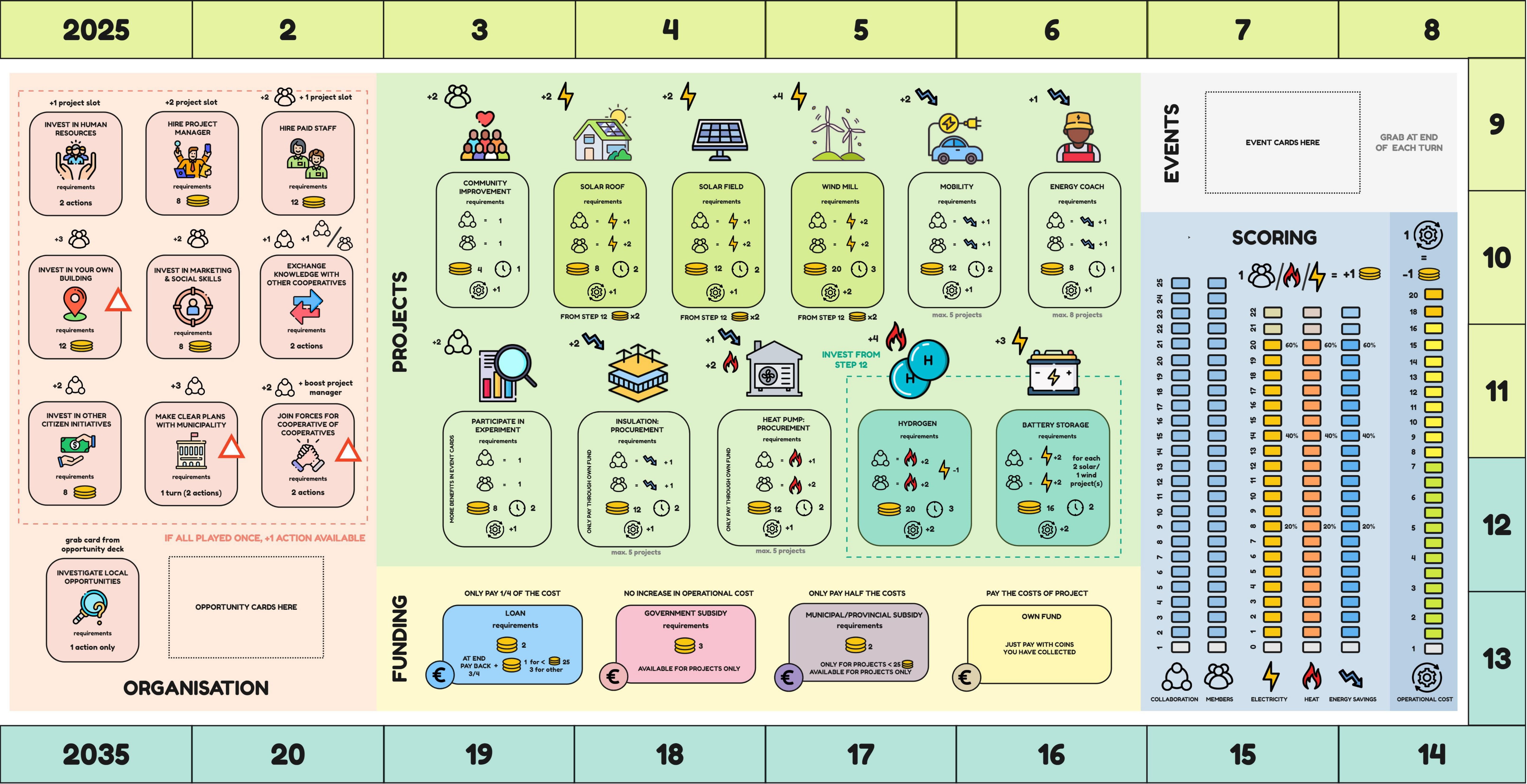
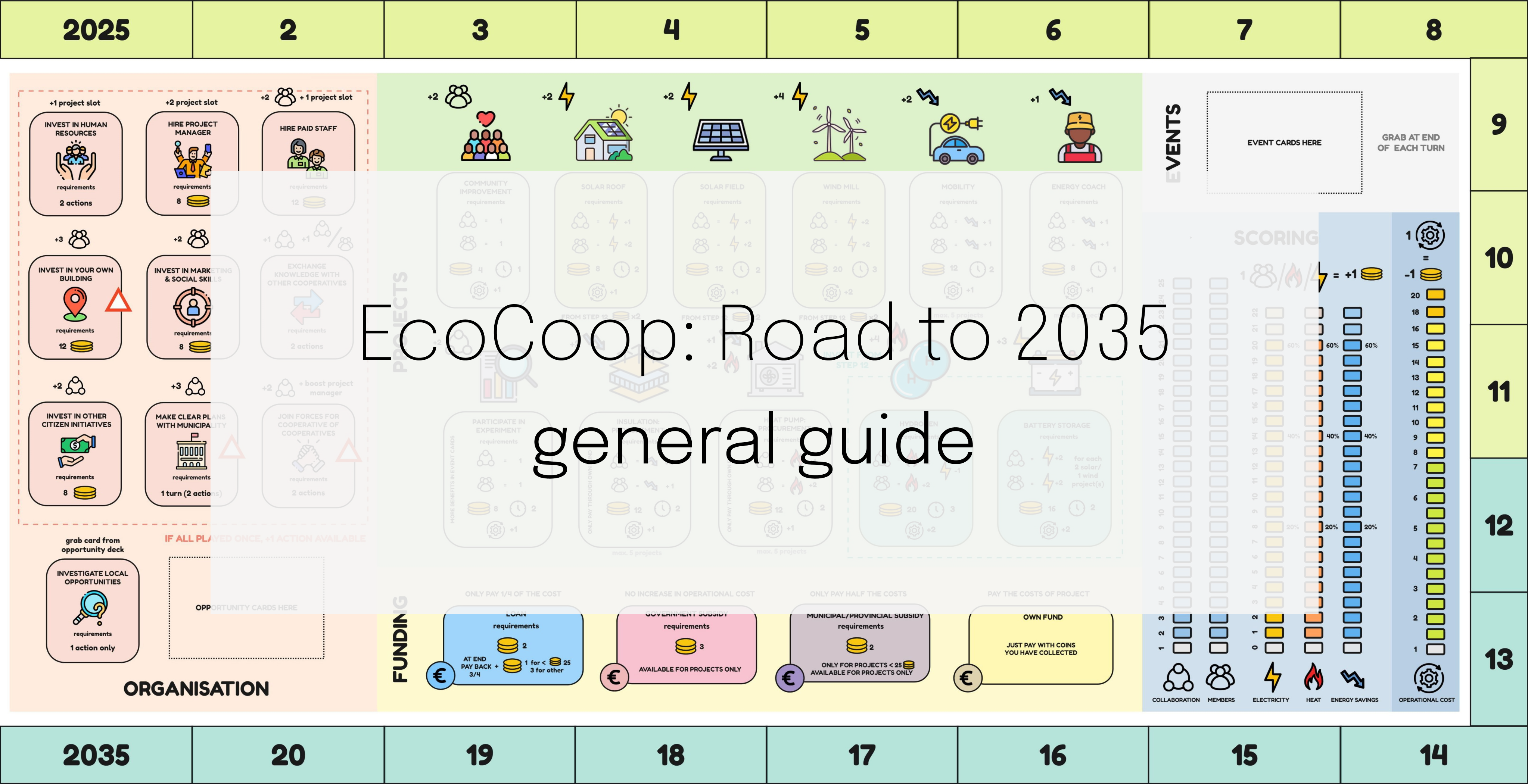
EcoCoop: Road to 2035
Experience

Facilitation
During this project I engaged in interview research to create the foundation for a professionalisation framework and tested the final game with members of 4 different cooperative boards

Scientific research & writing
In-depth literature research and interview research were needed to create a professionalisation framework. Focus group research was used to evaluate the game.

Game design & iterative design
I combined my design background and master in ecology to create a game. Prototypes were tested with multiple students to make sure the game was playable and fun.
Results
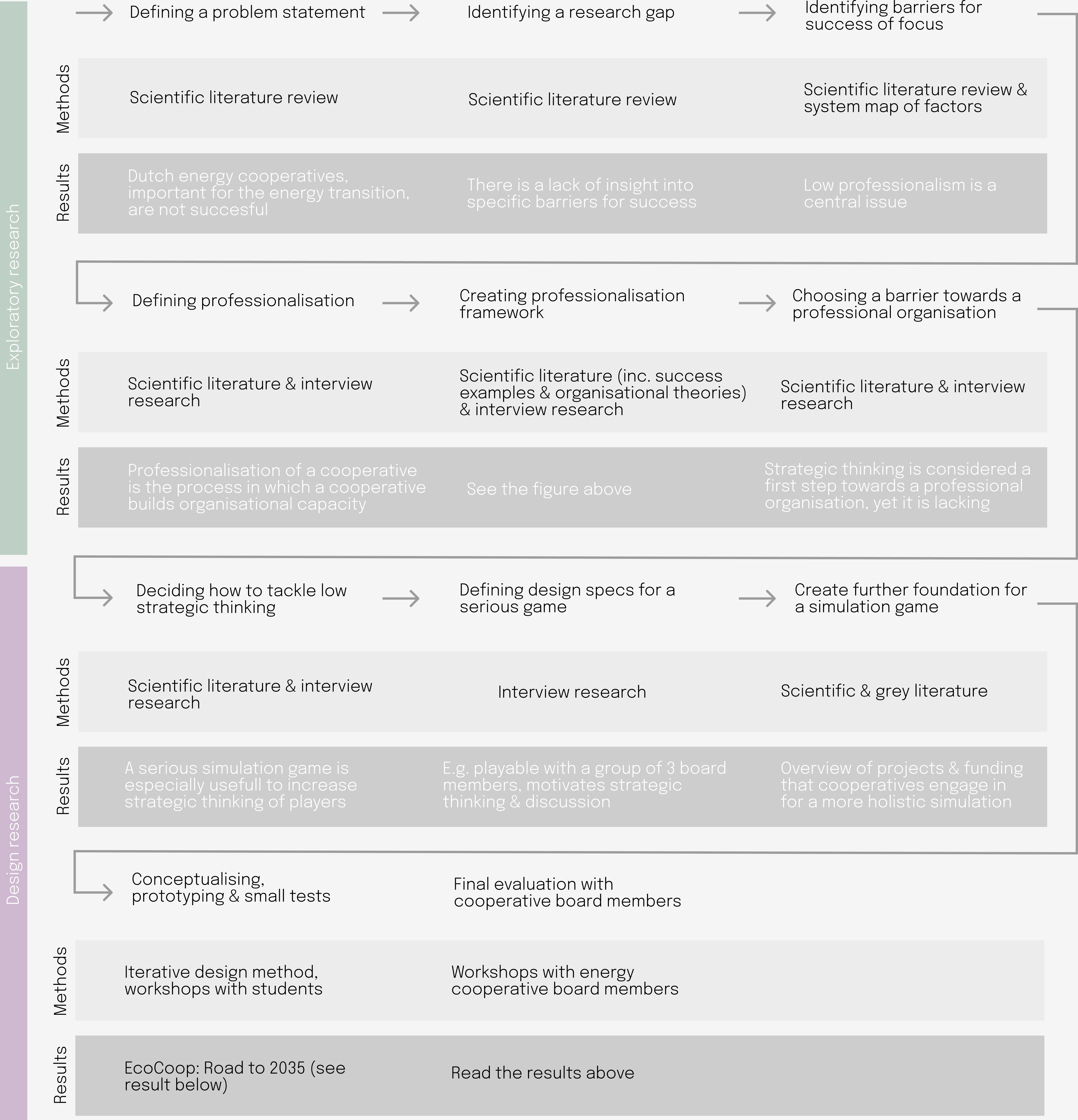
Below the professionalisation framework is shown as created through the method described in the Process section further down. The framework has been the foundation for the ‘organisational actions’ in the game and mechanics to represent professionalisation.
For example, in the game the dimensions collaboration and participation, which are important requirements for project execution, increase through ‘organisational actions’ – which represent succes factors. The factors’ relations to the three dimensions is shown in squares.

Read more about this framework
Professionalisation framework: the professionalisation pathways on the left are possible directions that cooperatives might take in succesful professionalisation. Considering each has their own barriers, colored circles are used to show this for each succes factor or barrier (the latter is indicated by a red triangle). The barrier of low strategic thinking is shown in the left column.
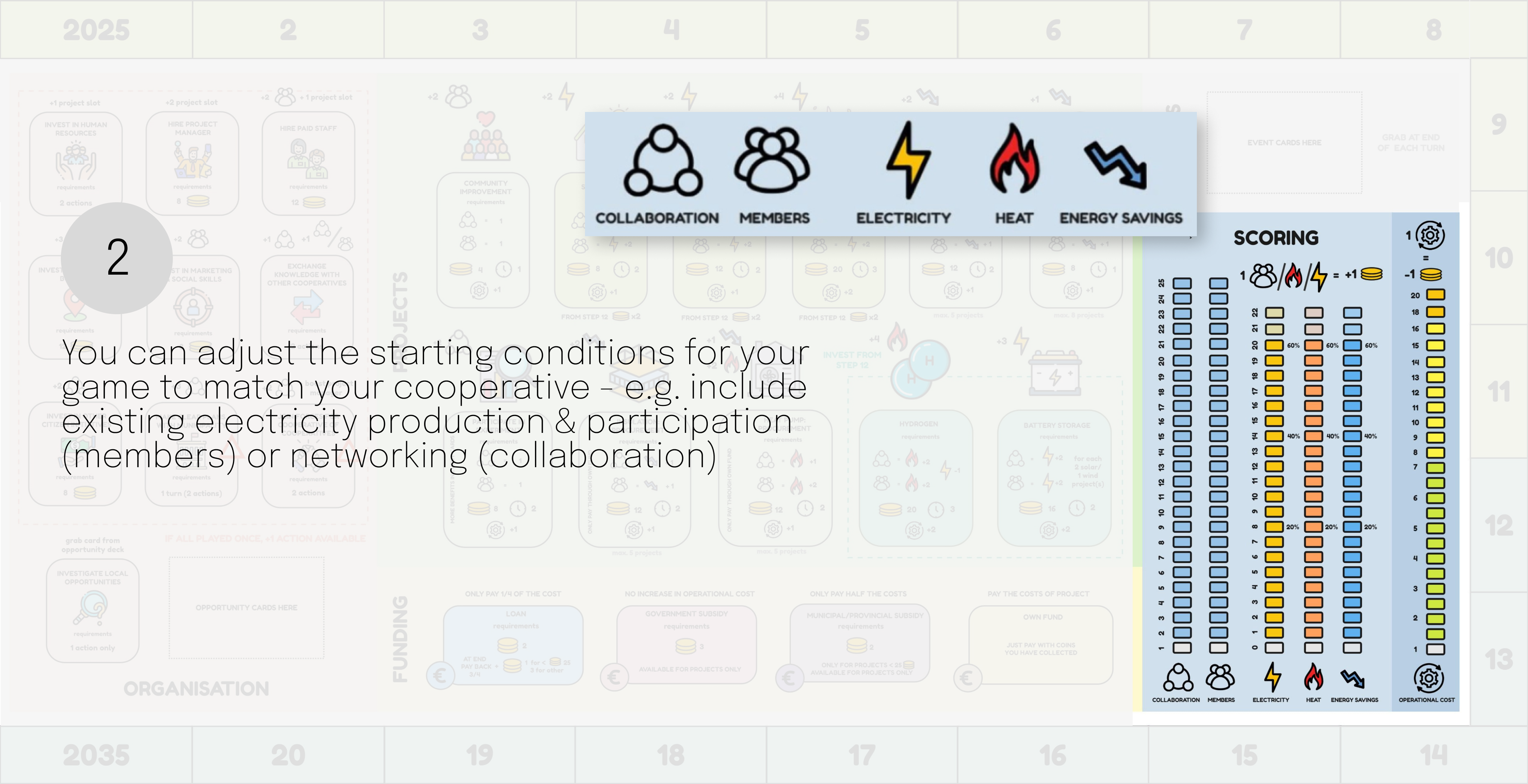
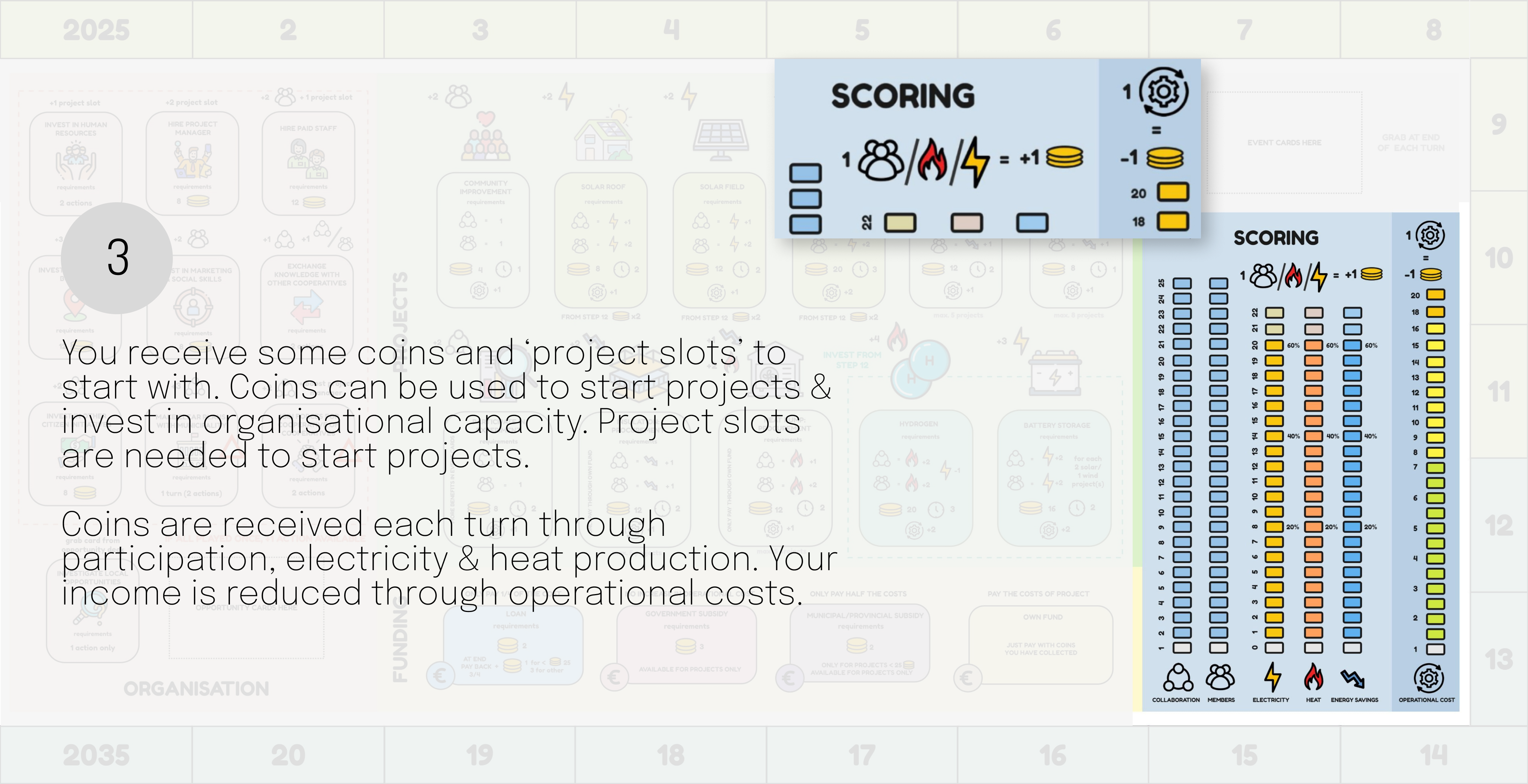
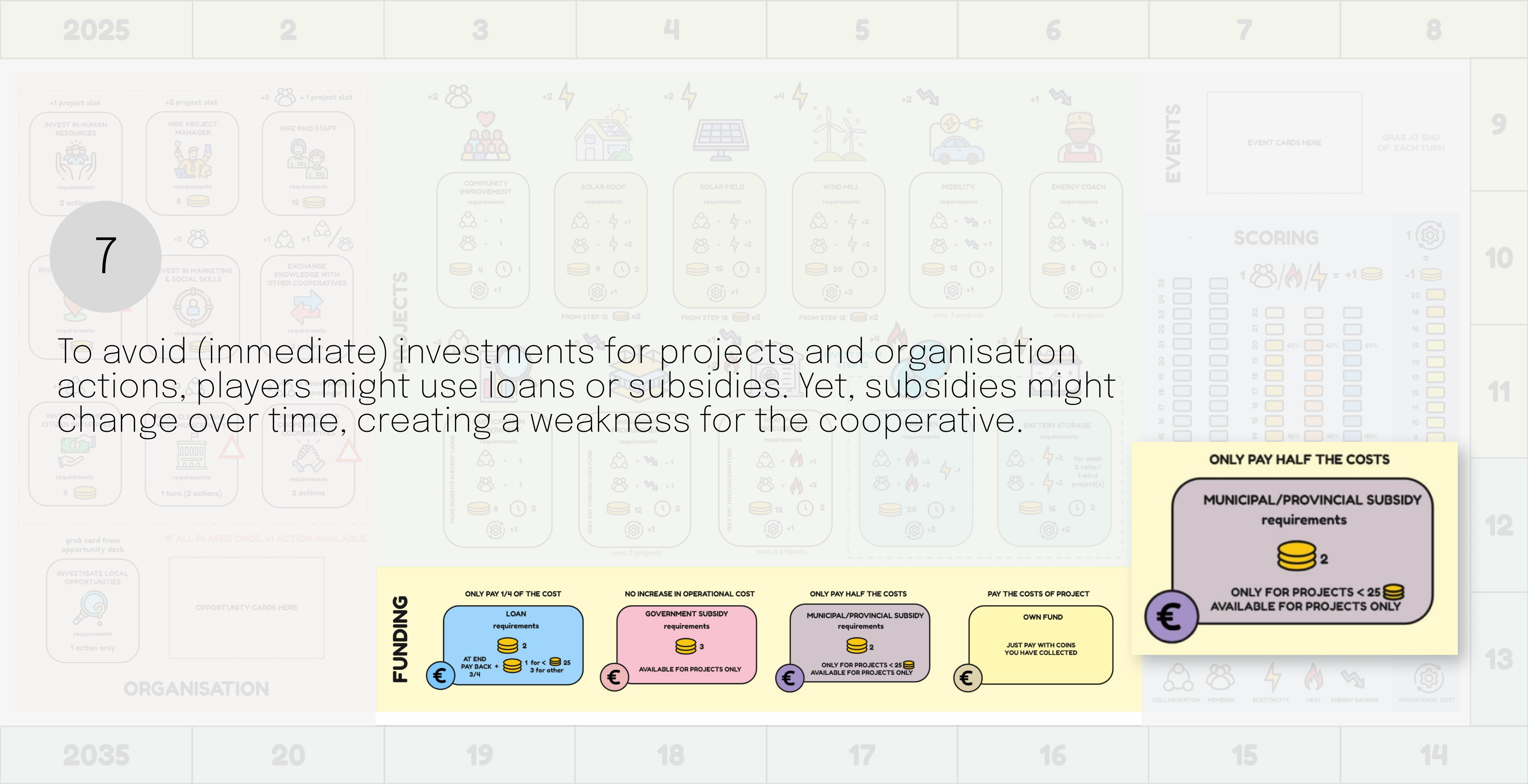
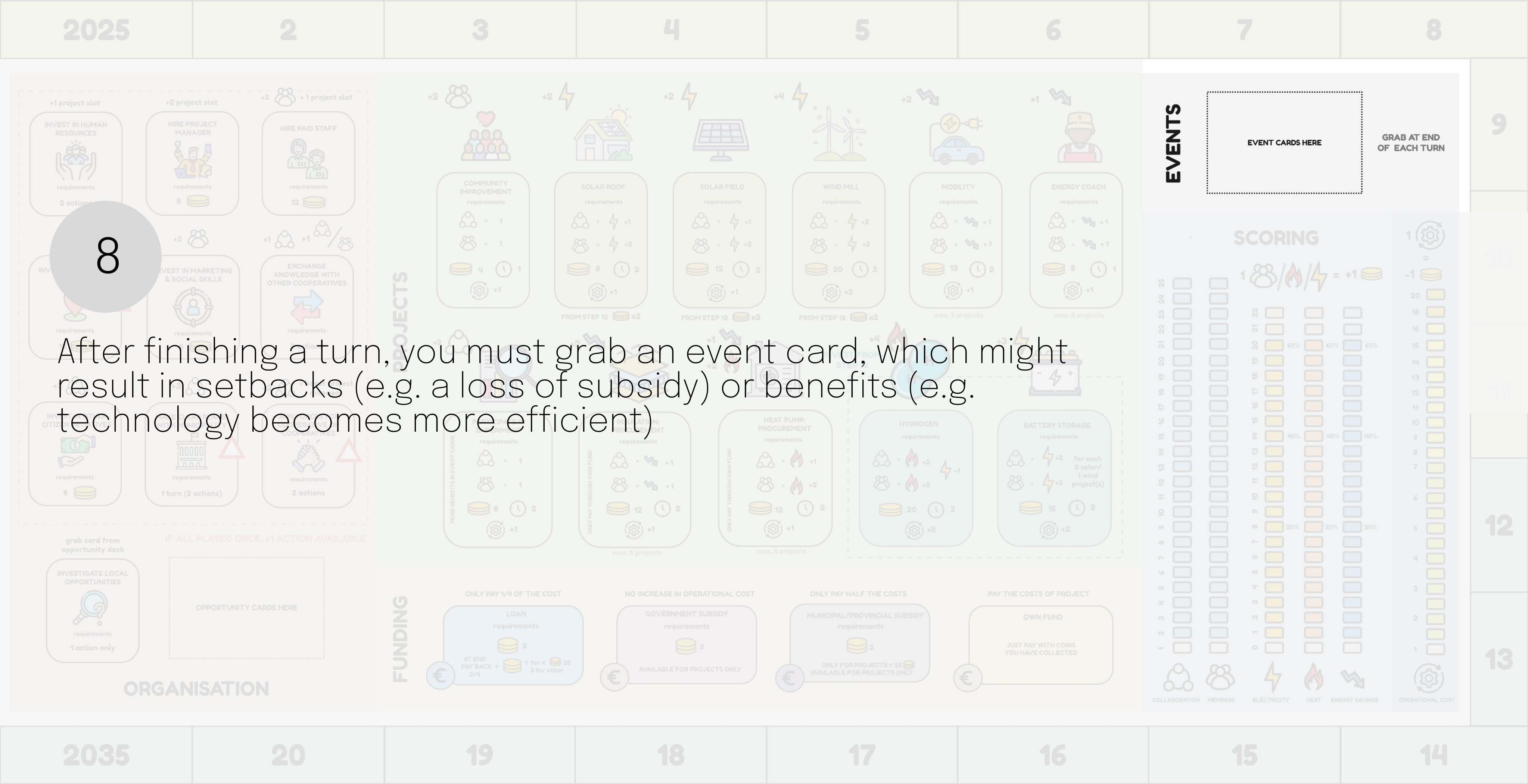
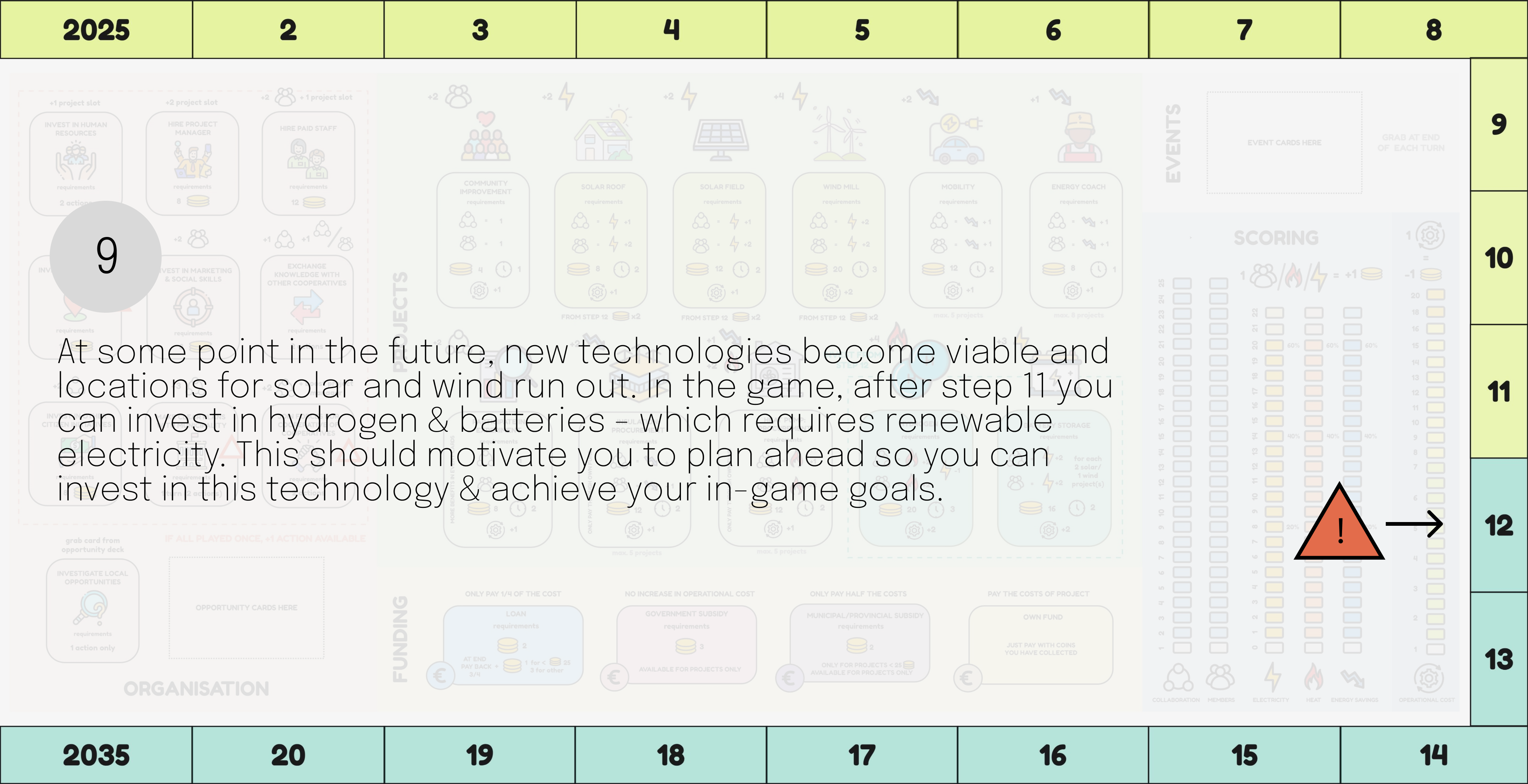
For the game, the workings are described in the slideshow below. The goal of the game is to entice players to think more deeply about the future of their cooperative and how to achieve objectives.
The game has been evaluated on 3 dimensions from the ‘Triadic Game Philosophy’ by Harteveld (2011). Here, the game is evaluated on reality (realism of the game), meaning (achievement of goals) and play (playability), see below.

Reality
Overall realism was appreciated in all workshops. Some specific aspects were especially appreciated (e.g. event cards)

Meaning
3 out of 4 cooperatives deemed the game a good tool for strategic thinking. First test was very positive about the usefulness.

Play
Though playable, the many features have made the game overwhelming to play without a game leader present. A hybrid or digital version should solve this.




Process
 Jasmijn Goudsmit